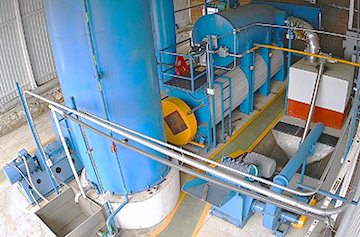
Cocopeat resources are abundant and easy to source, supporting large-scale processing with controllable costs. After washing, desalination, filter-press dewatering, drying and block forming, raw materials are turned into cocopeat blocks and coarse cocochip blocks, greatly boosting added value. Finished products are exported worldwide. As a supplier of complete production lines and equipment with years of deep industry experience, Taeda breaks down the core strengths of the systematic SCC cocopeat production line solution.
First, let’s look at the positioning and market value of the two mainstream finished products.
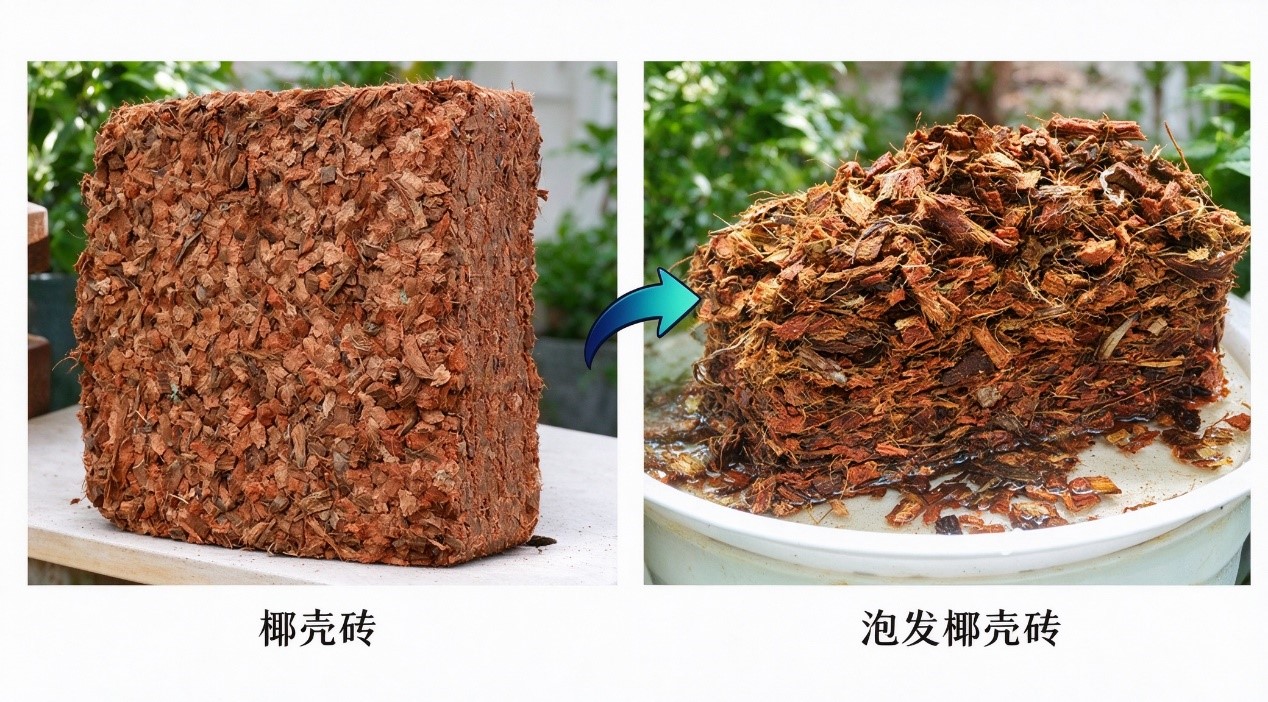
Coarse cocochip blocks, often shortened to coco chip blocks in the industry, mostly feature particle sizes of 6–10 mm. They are primarily used for premium planting scenarios such as orchids, clivias, bulbous flowers and high-quality bedding plants. Once rehydrated, they form a coarse granular structure with balanced air permeability, drainage and water retention. They will not damage plant roots and can be used directly without extra amendments like perlite. Targeting the premium horticulture segment, they command a higher premium, with an average market price of around CNY 5 per 500 g.
Below shows the rehydrated state of cocochip blocks:
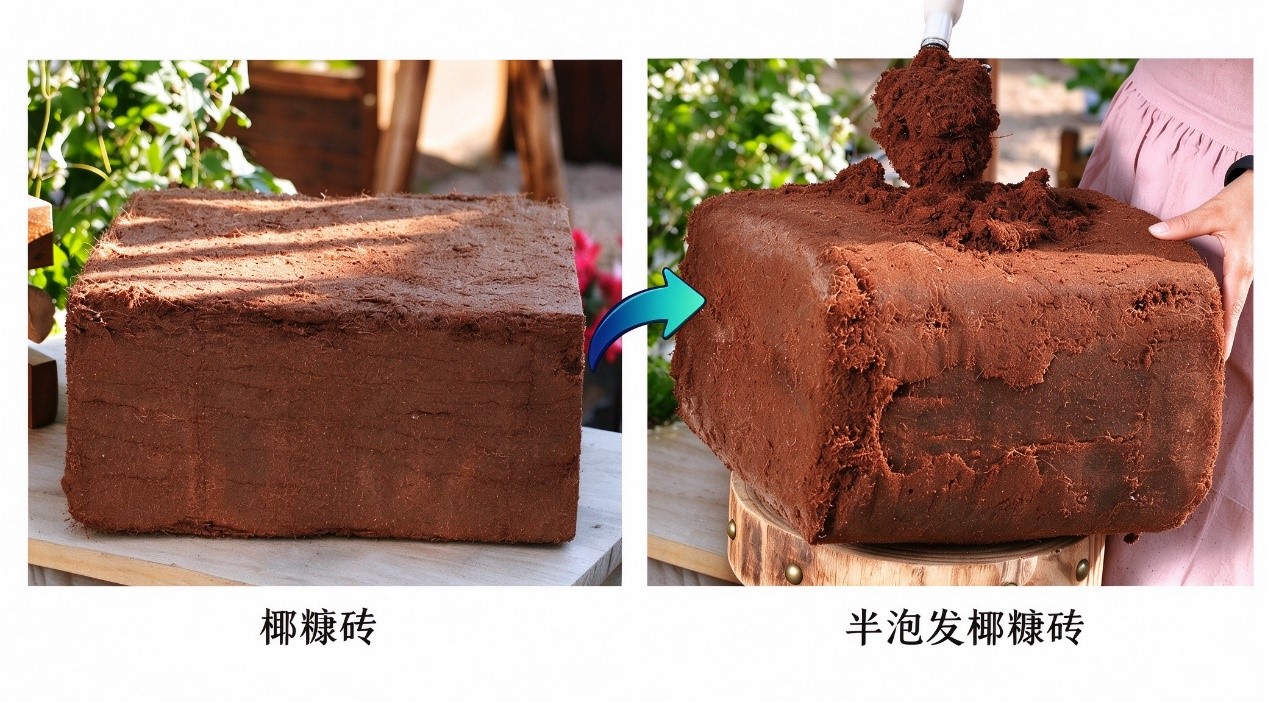
Cocopeat blocks are the mainstream basic coco blocks that entered the market earlier and have wider application. They serve household flower growers as well as large-scale nursery raising and cultivation for protected vegetables. They are already widely adopted in agricultural markets of coconut-producing regions such as Sri Lanka and the Philippines, with an average price of roughly CNY 3 per 500 g. When soaked, cocopeat forms a loose honeycomb structure with excellent water retention, aeration and nutrient holding capacity, making it an extremely versatile growing medium.
Below shows the partially rehydrated state of cocopeat blocks:
Both products can be paired with Taeda OS dryers, which adopt flash high-temperature sterilization at 121 °C. The finished blocks are free of insect eggs and pathogenic bacteria, clean and eco-friendly, and meet quarantine standards for exported growing media.
Early production lines were mostly built solely for cocopeat blocks. Yet coarse cocochip blocks deliver far higher product added value. A single line capable of flexibly switching between the two products cuts three major costs at once: capital investment in equipment, energy consumption for operation and labor management. Moreover, stable product specifications are maintained after production changeover — this is the core value of Taeda’s systematic SCC cocopeat production line solution.
A standout feature that sets Taeda’s SCC integrated solution apart from conventional standalone lines is its ability to produce both cocopeat blocks and coarse cocochip blocks on one line. Both finished goods consistently satisfy the strict requirements of high-end orders for EC value and expansion ratio.
From a fundamental process perspective, cocopeat and coco chips have vastly different material properties and present distinct production challenges. During washing and desalination, fine cocopeat is soaked and cleaned in fine-mesh filter cages. It absorbs moisture readily but tends to clog mesh screens and filter pores. Coarse coco chips feature large pores and hard granules, so they rarely block screens, yet their salt is trapped inside, making desalination much harder. Running both materials on the same line places high demands on the full process flow, equipment and automatic control system.
Through matched complete-set processes, the SCC solution achieves precise control at the dewatering stage: whether processing cocopeat or coco chips, the moisture content after dewatering is steadily kept within a similar range of 60%–70%, greatly easing adaptation for the downstream drying section. The drying system has been refined over more than a decade with a modular design. When switching to coco chip production, the dedicated coco chip discharging and unloading system can be activated with one click, accommodating conveying and drying of large-particle materials to prevent jamming, uneven drying and partial over-drying.
These targeted optimizations are not first-generation designs. They have been refined and accumulated over ten years by Taeda, based on continuous on-site project implementation and real production feedback, ensuring the full line delivers convenient changeover, reliable operation and low failure rates.
Beyond the flexible production capability of the equipment itself, choosing Taeda means selecting a complete process solution and long-term technical backing. After multiple generations of upgrades, the solution has evolved from the early crude drying and single static press mode into the mature combination of the OS cocopeat dryer system and tunnel horizontal block press units. Every upgrade draws on real production data and customer feedback.
Partnering with Taeda is more than purchasing a reliable set of equipment. We act as your technical advisor and long-term support for your production project. We provide end-to-end ongoing technical support, including commissioning after line startup, routine process optimization, productivity improvement, laboratory setup, compliance with export standards and product formulation adjustment. This helps you flexibly adjust your product mix, balancing high-volume cocopeat blocks and high-margin coarse cocochip blocks to hedge against market volatility and maximize project returns.
Relative news

Wechat:#1 Dept.

Wechat:#2 Dept.