As a major calcium-based material with vast market consumption, gypsum processing is an area where Taeda boasts years of rich experience, proprietary technologies and complete production lines, capable of solving various difficulties and pain points in its processing. In this issue, we will focus on one key category: flue gas desulfurization gypsum.
According to the Annual Report on Bulk Solid Waste Utilization and other relevant data, China's annual output of FGD gypsum has exceeded 100 million tons since 2020. In terms of utilization channels, FGD gypsum is mainly used as cement retarder, accounting for 52% and gypsum wallboard and plastering gypsum, taking up 24%. The two applications consume nearly three-quarters of the total FGD gypsum output. Besides, 11% is applied to agricultural soil improvement and road subgrade construction, 8% for mine backfilling and road building, and the remaining 5% is made into building blocks and other construction materials.
As major industrial by-product gypsum, FGD gypsum can fully replace natural gypsum after proper treatment for the production of gypsum building materials. Proper disposal and recycling of industrial by-product gypsum can not only consume solid waste resources, but also boost the development of gypsum product industry in regions short of natural gypsum reserves, and further promote the growth of circular economy.
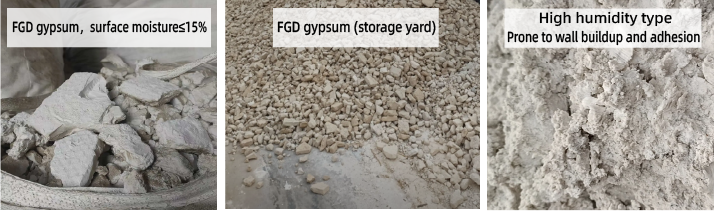
To achieve the above goals, the first priority is to solve the drying and dewatering problem of gypsum. This can greatly ease difficulties and cut costs during primary storage and transportation. After mechanical dewatering or filter pressing, the total moisture content of FGD gypsum is generally around 35%, with surface moisture ranging from 10% to 25%. Taeda normally designs the drying process to reduce the moisture content down to 3%-5%. Based on available heat sources on site, we recommend suitable equipment such as TDGD steam rotary dryer/rotary drum dryer/air-swept calcining mill for primary drying according to local conditions. The main technical difficulty lies in the strong adhesiveness of raw FGD gypsum. All the above solutions are equipped with targeted anti-sticking measures, among which the Gypsum Air-Swept Calcination Mill delivers the best overall performance and drying effect. Many clients adopt two air-swept calcining mills in series to complete the whole process from drying to calcination.
After primary drying, the finished intermediate features stable indicators and no adhesiveness, which facilitates long-term storage and greatly cuts transportation costs. Its surface moisture is strictly controlled within 10%, fully complying with the standard GB/T 37785. The processed material can be directly sold as industrial by-product gypsum, or used as cement retarder, roadbed backfill and filler for general building materials.
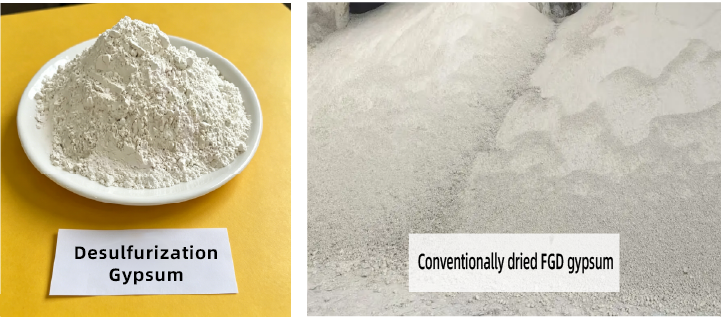
To produce high-end building materials including gypsum board and plastering gypsum, the quality-stabilized FGD gypsum intermediates at this stage can be massively fed into calcination lines as industrial raw materials to prepare beta-hemihydrate gypsum for building material production. If you are interested in this process, stay tuned for our next session to dive deeper into gypsum calcination.
Relative news

Wechat:#1 Dept.

Wechat:#2 Dept.